

About
I write here as Nicanor Rodrigues. The name is borrowed, and openly so. Nicanor was my great-grandfather, a left-wing man caught up in the controversial Coluna Prestes who, as the family tells it, never reached the main march at all.
For some, the tale goes, his group was ambushed on the way to join the column; for others, that he was late due to less clear reasons. Still, it is a fact that he crossed the border into exile in Uruguay while the rest of the rising marched on through Brazil. In the family, his name has always drawn admiration and unease in split measure, and through the years of the dictatorship, it drew silence instead, his background being too dangerous to claim.
He was out of step with the very rebellion he believed in, which makes him a fitting patron for a site named after a whale that calls at a frequency no other answers. I am told I take after him, in temperament and in some of his convictions. That is as good a reason as any to write under his name.
It is a pen name, used in the open. I keep this writing apart from the work I do under my own name, so that a search for the professional turns up the professional, and a visit here turns up my writing, without the two tangling in between. The point is not to conceal who I am; it is to keep the two profiles from collapsing into each other.
As for who I am.
I was born in Brazil, on its southern edge, where the border meets Uruguay and Argentina, where the lines on maps stop meaning much. It is the Pampas region, a place of extensive fields, industrialised mountains, and a grey, charmless coast. An unlikely Brazil of sharp cold winters and hard summers where the people are no warmer.
It was the land where the Kaingang tribes of the north met the Charruas from the south, before the Spanish and the Portuguese carved it up between them. They worked the land with Africans they had carried over in chains. Later came Italians, Germans, Poles, and many more, drawn by the vast land the government was eager to fill with almost anyone, so long as it was not the people it had freed at abolition or the few descendants of the original people that they had dispossessed in the centuries before.
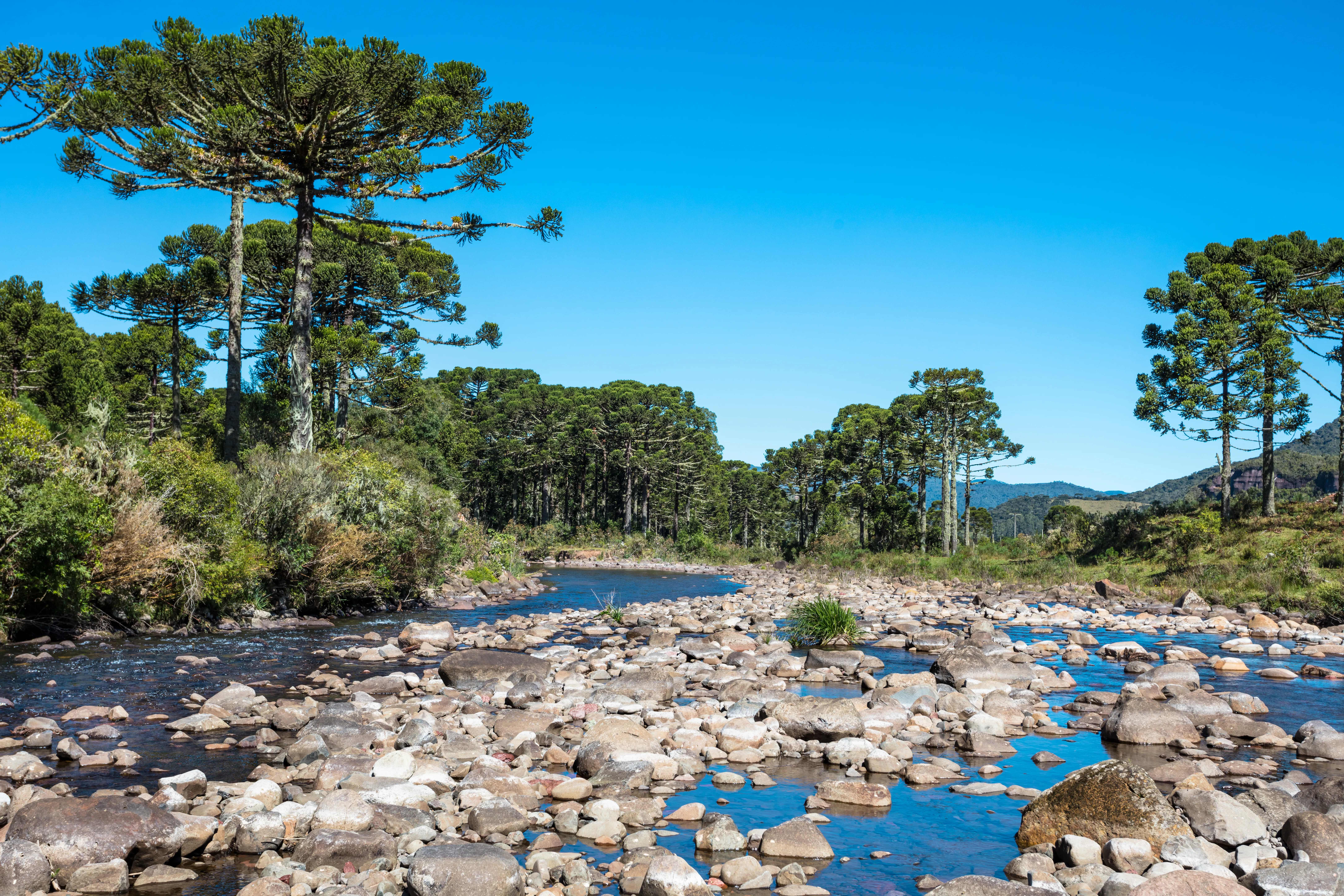
Out of that, the region built itself a costume and fictional traditions far younger than the locals pretend. In a land where penguins blow up the coast on a wind that cuts, I never felt fully part of it, and I say that as a mixed child of exactly that place.
In a country of social extremes, privilege let me leave. I had meant to travel Europe and then settle back home as a compliant middle-class Brazilian lawyer; instead, the travelling washed me up in the UK, where the neoliberal experiment Thatcher began was at its peak, under New Labour’s optimism. Here I stayed, without planning to.
Belonging came in the end, never to the kingdom; my accent has always marked me as an outsider, but to London itself and its many nations. Marrying into a British family taught me the nuances of the place and its singular class system.
Eventually I finished my studies here, married here, and found myself, ironically compliant with a career, a mortgage, friends, an ex-wife, and a very British daughter who keeps me tied to this land, probably until the day my ashes are scattered in one of its forests, where I find the space I need with my companion hounds.
The career runs through technology. I have been near it since my first computer in the late 80s, when I learned the logic of programming, through my first job minding SQL databases in the late 90s, to the work I do now, advising large enterprises on data, digital transformation, and, lately, AI implementations.
Before any of it, I attended law school, focusing on philosophy of law and legal positivism. This led me to realise that norms are the consolidation of power and that justice is no more than subversive rhetoric. No surprise, I have left it unfinished, replaced by international relations studies in the UK.
For years, I have grappled with the persistent dichotomy that refuses to resolve.
On one hand, hope for a progressive future. Constantly learning about feminism and challenging my unconscious biases. A genuine belief in the potential of anarchism as a discipline rather than mere slogans; a commitment to critical thinking as an ongoing pursuit rather than a credential; and political philosophy pursued without the comfort of belonging to a particular group.
On the other hand, my professional career, which helps fuel the capitalist wheel, working within large international corporations and managing complex, multi-layered information systems.
This daily reality has increased the disparity when considering the enormous potential of AI, its positive aspects that I directly benefit from, and its negative impact through the lens of society, culture, and the environment.
52hzSentient has no comment section, no list to join, and at its essence, will never have a metric to feed. The only feedback loop is the email: nicanor@52hzsentient.xyz. If something here strikes you as wrong, or right, or worth an argument, that is where to send it.